
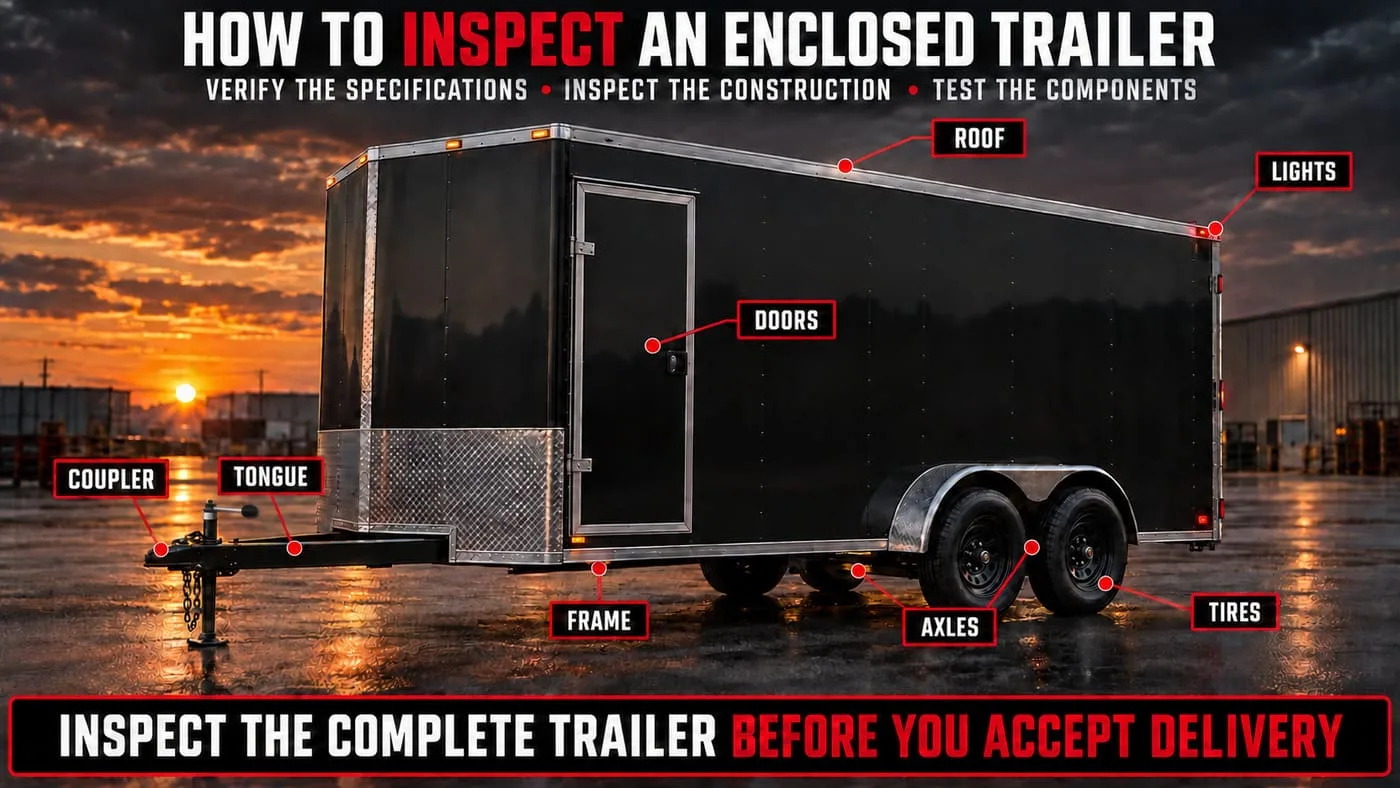
Confirm the trailer’s dimensions, weight ratings, construction, running gear, doors, electrical system and installed options. If you are ordering a custom trailer, compare the finished trailer with your signed specifications before taking delivery.
This guide explains what to inspect and which questions to ask before buying an enclosed trailer.
IMPORTANT
Trailer specifications and components vary by manufacturer and model. Always verify ratings and maintenance requirements using the trailer’s certification label, component labels and manufacturer documentation.
1. Start With the VIN and Certification Label
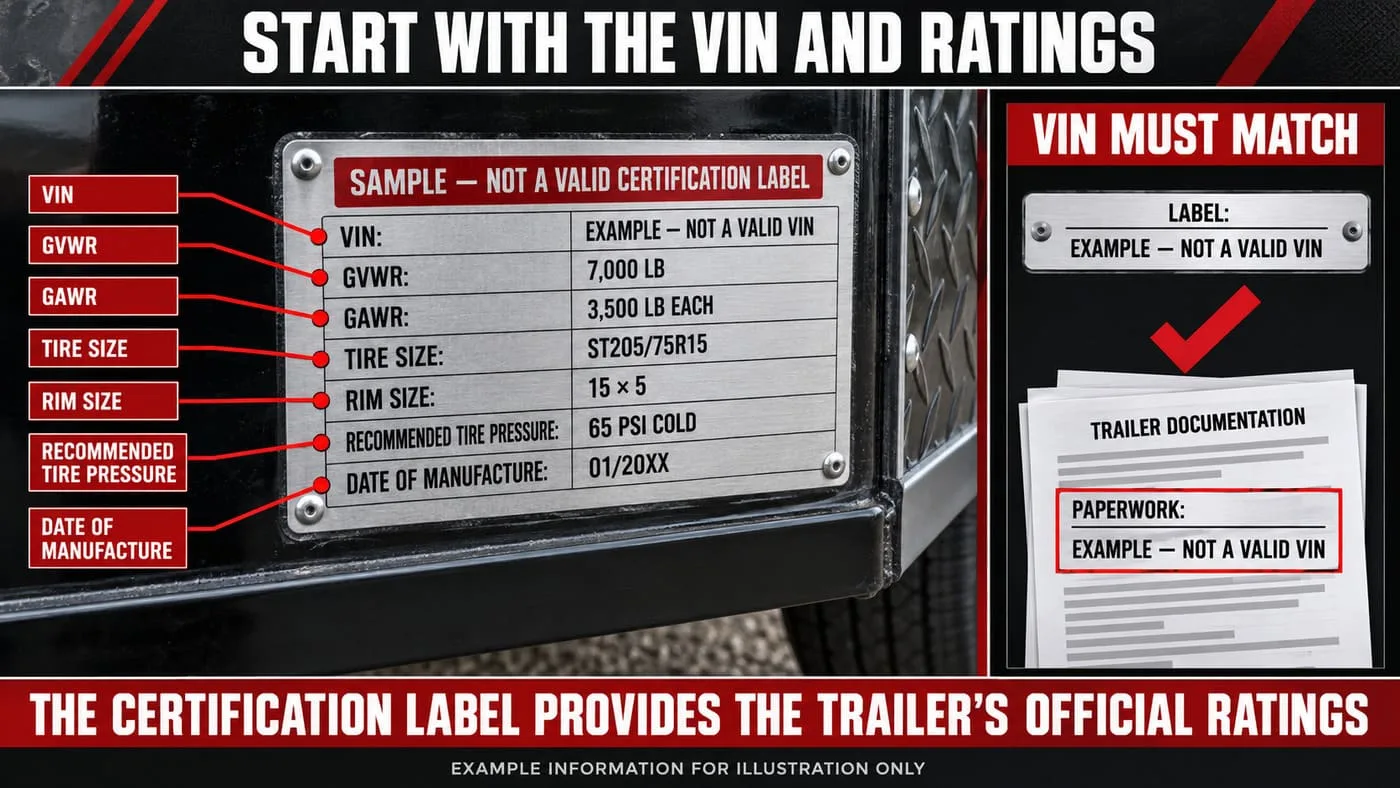
Confirm that the label is legible and includes the correct:
- ✓Manufacturer
- ✓Vehicle identification number
- ✓Model or trailer size
- ✓Date of manufacture
- ✓Gross Vehicle Weight Rating
- ✓Gross Axle Weight Rating
- ✓Tire size
- ✓Rim specifications
- ✓Recommended tire pressure
Do not assume the trailer’s GVWR based only on the number or advertised capacity of its axles. The certification label provides the trailer’s official rating.
2. Confirm the Trailer’s Actual Dimensions
Measure or confirm:
- ✓Exterior body width
- ✓Interior wall-to-wall width
- ✓Cargo-floor length
- ✓Interior height
- ✓Rear-door clear width
- ✓Rear-door clear height
- ✓Side-door opening
- ✓Space between interior fender boxes
- ✓V-nose configuration
- ✓Overall trailer length
- ✓Ground clearance
A trailer may have enough interior space for the cargo but still have a rear opening that is too narrow or too low. Measure the cargo and the usable opening before ordering.
Related guide: Trailer Dimensions and Measurements Guide
3. Inspect the Main Frame and Tongue
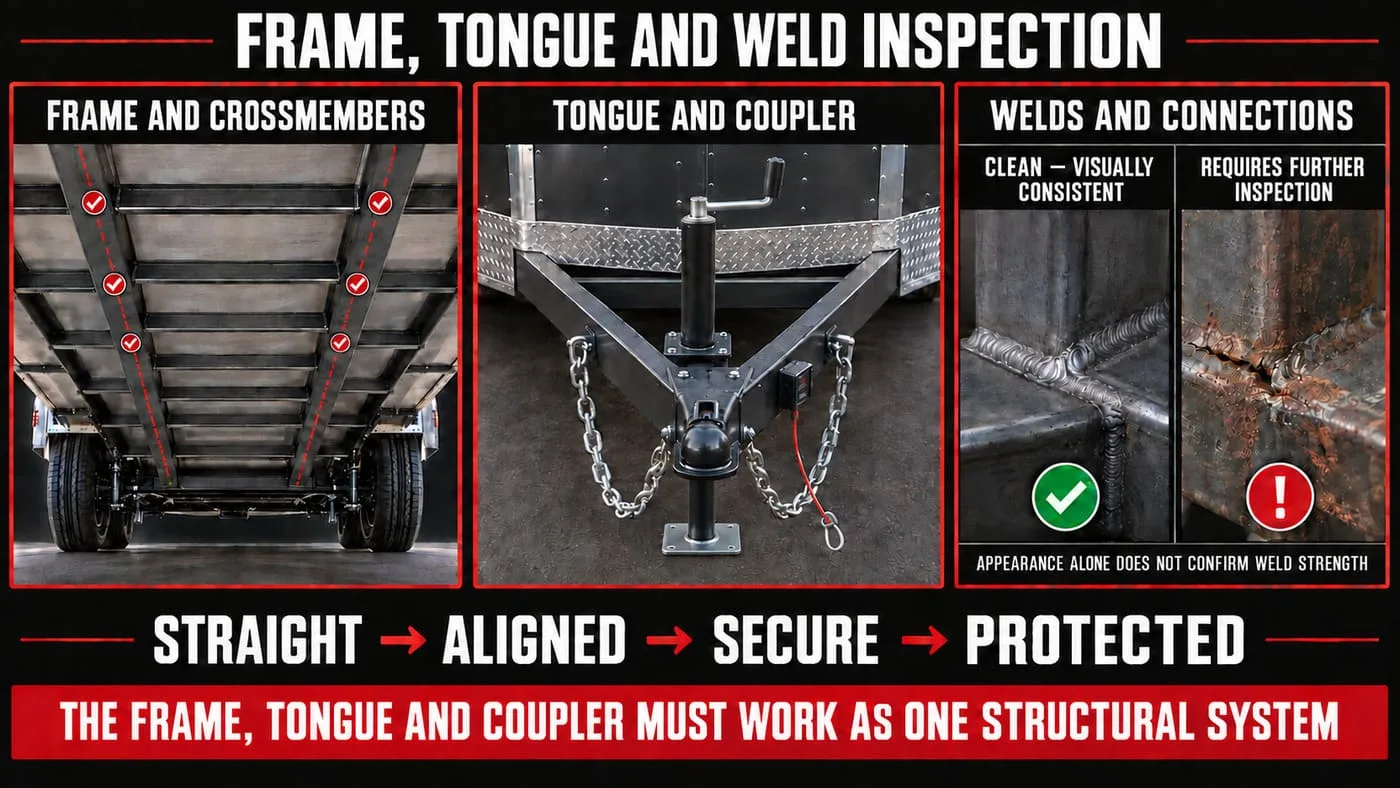
Look for:
- ✓Straight frame rails
- ✓Properly aligned crossmembers
- ✓Consistent welds
- ✓Complete weld coverage at critical joints
- ✓Cracked, incomplete or visibly contaminated welds
- ✓Bent or damaged steel
- ✓Excessive surface rust
- ✓Unprotected drilled holes or exposed metal
- ✓Securely attached outriggers
- ✓Proper tongue alignment
- ✓Adequate tongue construction for the trailer and intended load
Custom equipment such as generator compartments, toolboxes, winches and electric jacks should be supported correctly without interfering with the coupler, safety chains or tow vehicle.
4. Examine the Coupler, Jack and Safety Equipment
Inspect the:
- ✓Coupler
- ✓Coupler latch
- ✓Safety chains
- ✓Chain attachment points
- ✓Tongue jack
- ✓Breakaway switch
- ✓Breakaway cable
- ✓Seven-way plug
- ✓Electrical junction box
- ✓Battery box, when equipped
Safety chains should be long enough to cross under the tongue without dragging. Their attachment points should be secure and independent of the coupler.
The breakaway cable should be routed separately from the safety chains and should not be wrapped around them.
Related guide: Trailer Hitch & Coupler Guide
5. Inspect the Axles and Suspension
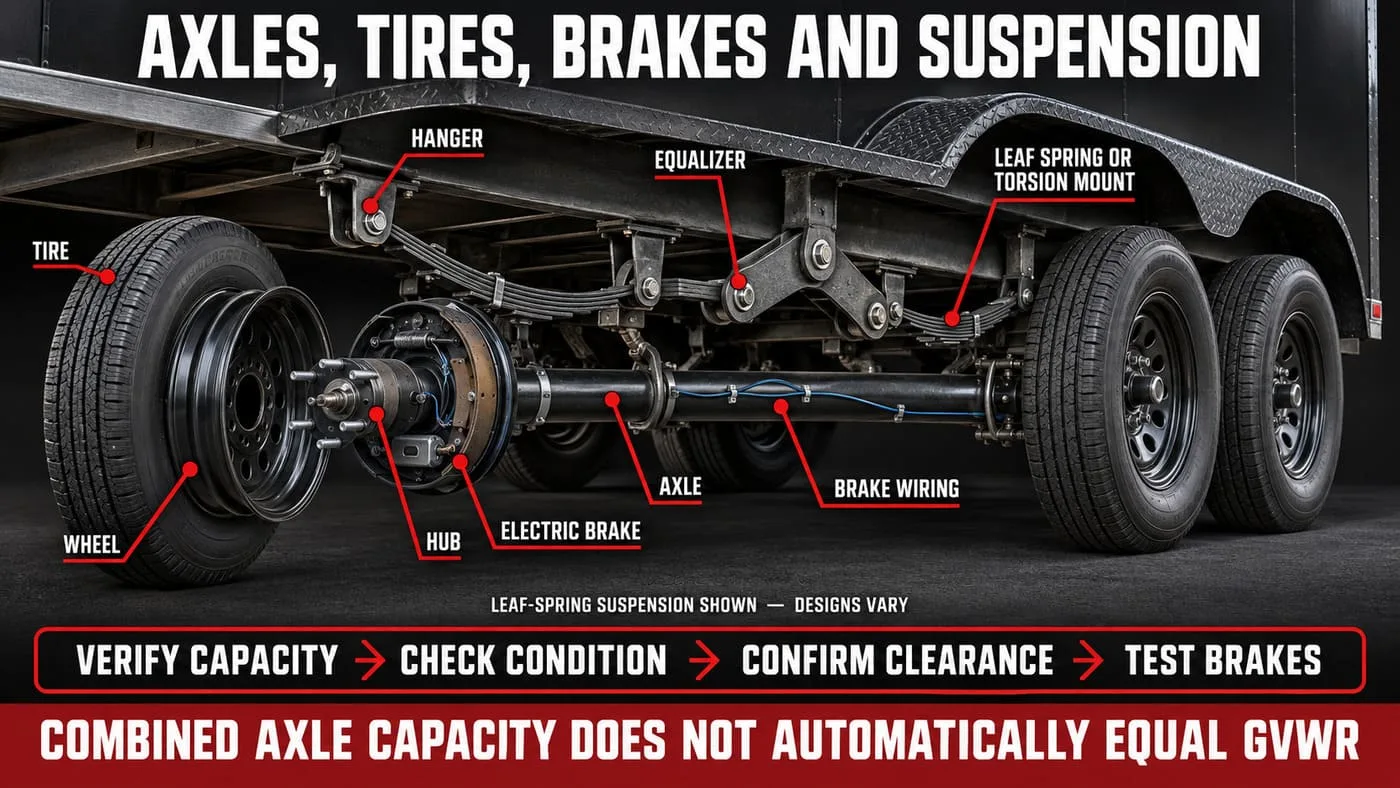
Check:
- ✓Number of axles
- ✓Axle capacity labels
- ✓Spring or torsion suspension
- ✓Hangers and mounting hardware
- ✓Equalizers on leaf-spring systems
- ✓U-bolts
- ✓Brake wiring
- ✓Hub and brake assemblies
- ✓Axle alignment
- ✓Clearance between tires and trailer body
A heavier axle package may require heavier wheels, tires, brakes, frame components and coupler equipment. Evaluate the trailer as a complete system.
Related guide: Trailer Axle Guide
6. Check the Tires and Wheels
Inspect each tire for:
- ✓Correct size
- ✓Correct load range
- ✓Adequate load capacity
- ✓Proper inflation
- ✓Matching construction
- ✓Sidewall damage
- ✓Cuts, cracks or bulges
- ✓Uneven tread
- ✓Excessive age
- ✓Clearance from the fender and body
- 3,500-pound axle: commonly 5-lug wheels
- 5,200-pound axle: commonly 6-lug wheels
- 7,000-pound axle: commonly 8-lug wheels
The spare tire should also have the correct size, load range and wheel pattern.
Wheel-lug torque requirements vary. Use the axle, wheel or trailer manufacturer’s specified torque and tightening procedure.
7. Inspect the Exterior Skin and Trim
Check for:
- ✓Excessive waviness or distortion
- ✓Loose exterior panels
- ✓Missing or poorly installed fasteners
- ✓Scratches, dents or damaged coatings
- ✓Gaps around trim
- ✓Unsealed penetrations
- ✓Sharp edges
- ✓Loose diamond plate
- ✓Misaligned corner posts
- ✓Inconsistent roofline
- ✓Properly installed fenders
If the trailer has a semi-screwless or PolyCore exterior, confirm that the finished construction matches the specifications on the order.
8. Inspect the Roof and Seams
Inspect the roof from a safe viewing position. Do not climb onto it unless the manufacturer confirms it is designed to support you.
Check:
- ✓Front and rear roof seams
- ✓Roof-edge trim
- ✓Sealant coverage
- ✓Roof vents
- ✓Air-conditioner openings
- ✓Wiring penetrations
- ✓Exterior lights
- ✓Awning brackets
- ✓Ladder-rack mounting points
- ✓Signs of dents or standing water
Inside the trailer, inspect the ceiling and upper wall corners for discoloration, moisture or daylight entering through gaps.
Related guide: Enclosed Trailer Roof Guide
9. Test the Rear Ramp or Barn Doors
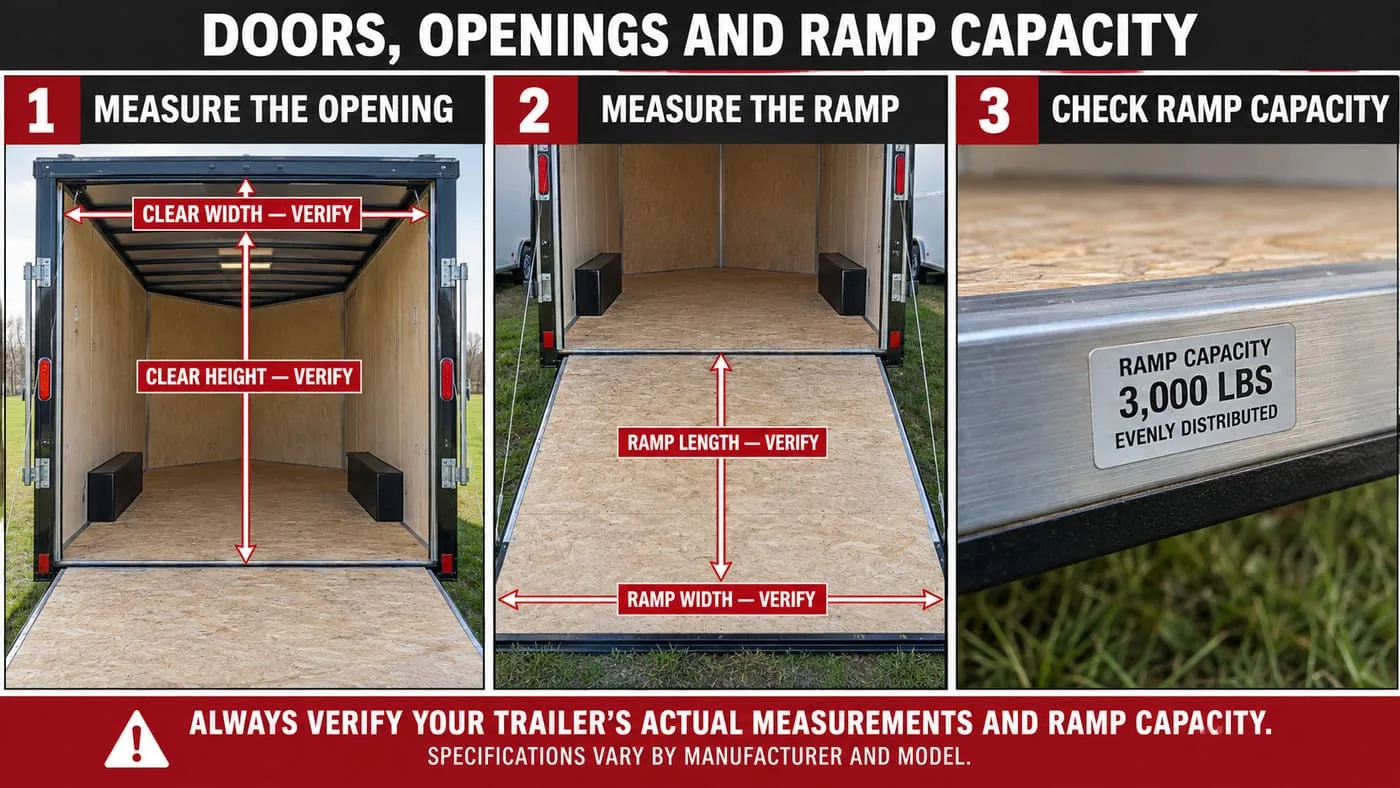
For a Ramp Door
- ✓Smooth movement
- ✓Spring or cable assistance
- ✓Secure hinges
- ✓Proper alignment
- ✓Door latches
- ✓Ramp surface
- ✓Transition flap
- ✓Ramp angle
- ✓Ground contact
- ✓Manufacturer-rated capacity
For Barn Doors
- ✓Door alignment
- ✓Hinges
- ✓Hold-back hardware
- ✓Interior and exterior latches
- ✓Weather seals
- ✓Clearance when fully open
Related guide: Enclosed Trailer Door Guide
10. Inspect the Side Entry Door
Verify:
- ✓Proper alignment
- ✓Smooth latch operation
- ✓Secure hinges
- ✓Complete weather seal
- ✓Working lock
- ✓Adequate opening width and height
- ✓Interior safety release, when equipped
- ✓No interference with awnings or exterior equipment
If the trailer has double side doors, concession doors, escape doors or oversized openings, test every latch, hinge and support mechanism.
11. Inspect the Floor, Walls and Ceiling
Check the Floor For:
- ✓Soft areas
- ✓Raised fasteners
- ✓Gaps between panels
- ✓Damaged plywood
- ✓Moisture staining
- ✓Uneven transitions
- ✓Proper support at seams
Check the Walls and Ceiling For:
- ✓Loose panels
- ✓Exposed sharp edges
- ✓Missing trim
- ✓Uneven joints
- ✓Damaged insulation
- ✓Unfinished penetrations
- ✓Water stains
- ✓Visible daylight at seams
Related guide: Enclosed Trailer Flooring Guide
12. Test the Road-Lighting System
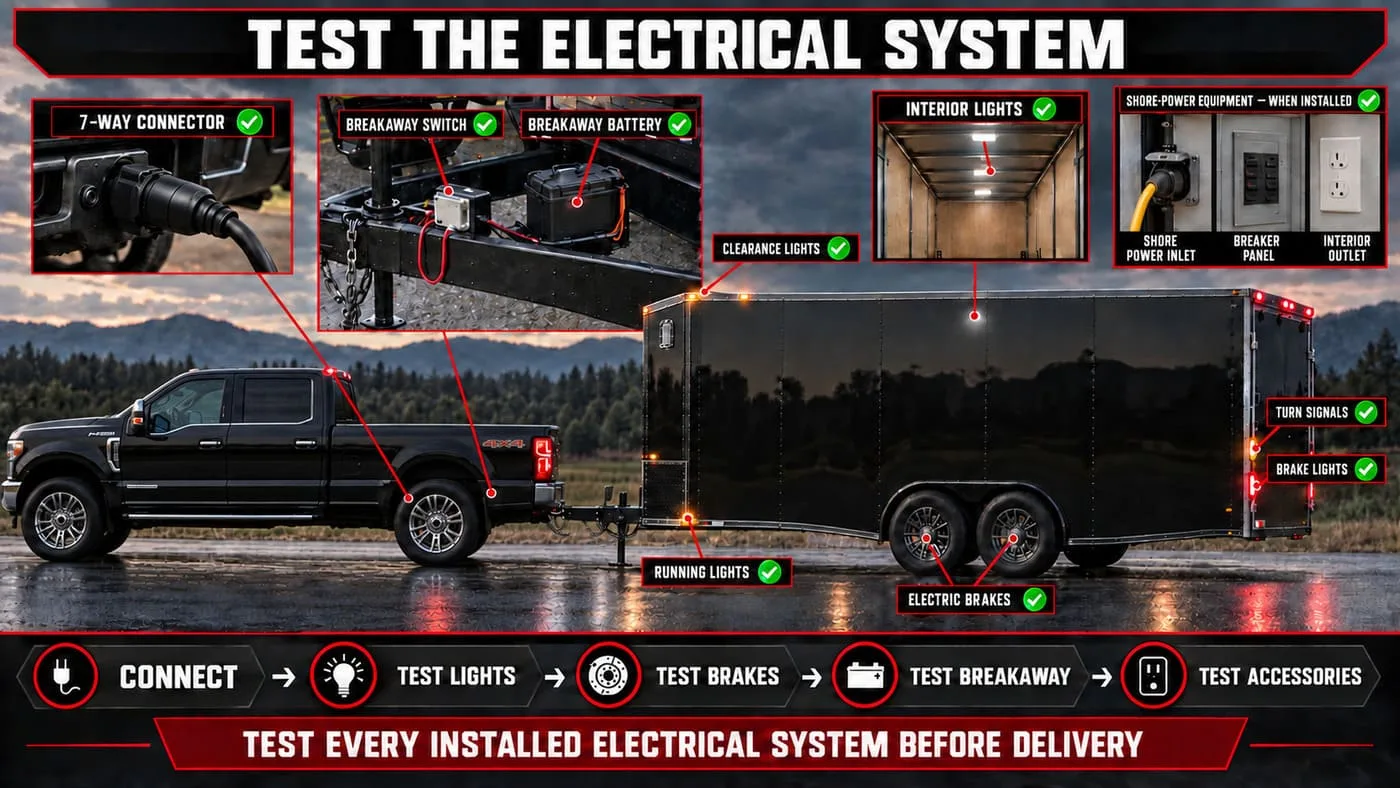
Test:
- ✓Tail lights
- ✓Brake lights
- ✓Left turn signal
- ✓Right turn signal
- ✓Running lights
- ✓Clearance lights
- ✓License-plate light
- ✓Reverse lights, when equipped
- ✓Electric brakes
- ✓Breakaway system
A lighting problem can come from the trailer, tow vehicle, connector, wiring or ground connection. Test methodically before assuming which component is responsible.
13. Test the Trailer Brakes and Breakaway System
Before towing, verify:
- ✓Brake-controller operation
- ✓Brake response
- ✓Seven-way connector condition
- ✓Breakaway-battery charge
- ✓Breakaway-switch operation
- ✓Secure brake wiring
- ✓Correct adjustment when applicable
Brake testing and adjustment should follow the axle, brake-controller and trailer manufacturers’ instructions.
14. Inspect Installed Electrical and Custom Equipment
Depending on the build, this may include:
- ✓12-volt interior lights
- ✓110-volt lights
- ✓Electrical outlets
- ✓Shore-power inlet
- ✓Breaker panel
- ✓Battery
- ✓Converter or charger
- ✓Generator connection
- ✓Air conditioner
- ✓Roof vent
- ✓Exterior scene lights
- ✓Winch
- ✓Electric tongue jack
- ✓Stereo equipment
Plug the trailer into the correct power source and test one system at a time. Custom electrical systems should include appropriate documentation and operating instructions.
Related guide: Enclosed Trailer Electrical Guide
15. Confirm Every Ordered Option
Confirm the correct:
- ✓Trailer size
- ✓Exterior color and material
- ✓Interior height
- ✓Axle package
- ✓GVWR
- ✓Side-door size and location
- ✓Rear-door configuration
- ✓Interior finish
- ✓Insulation package
- ✓Flooring
- ✓Electrical package
- ✓Air conditioner
- ✓Roof vents
- ✓Cabinets
- ✓Tie-downs or E-Track
- ✓Winch and mounting plate
- ✓Ladder racks
- ✓Awning
- ✓Generator compartment
- ✓Spare tire and mount
- ✓Exterior lighting
Remember that installed options add weight and can reduce available payload.
16. Check Fit, Finish and Final Workmanship
Look for:
- ✓Loose screws or fasteners
- ✓Metal shavings
- ✓Construction debris
- ✓Sharp edges
- ✓Sealant gaps
- ✓Misaligned trim
- ✓Loose wiring
- ✓Damaged paint or coating
- ✓Missing caps or covers
- ✓Unfinished interior openings
- ✓Doors that rub or bind
- ✓Incorrect or missing options
17. Verify Your Tow Vehicle and Hitch Setup
Confirm the tow vehicle’s:
- ✓Tow rating
- ✓Payload capacity
- ✓Gross Combined Weight Rating
- ✓Receiver rating
- ✓Ball-mount rating
- ✓Hitch-ball size and rating
- ✓Electrical connector
- ✓Brake controller
- ✓Tire ratings
The trailer should sit level when connected and loaded. An incorrect ball-mount rise or drop can cause the trailer to tow nose-high or nose-low.
THE LOWEST-RATED COMPONENT LIMITS THE TOWING SYSTEM.
Related guide: Enclosed Trailer Towing Guide
Related guide: Trailer Hitch & Coupler Guide
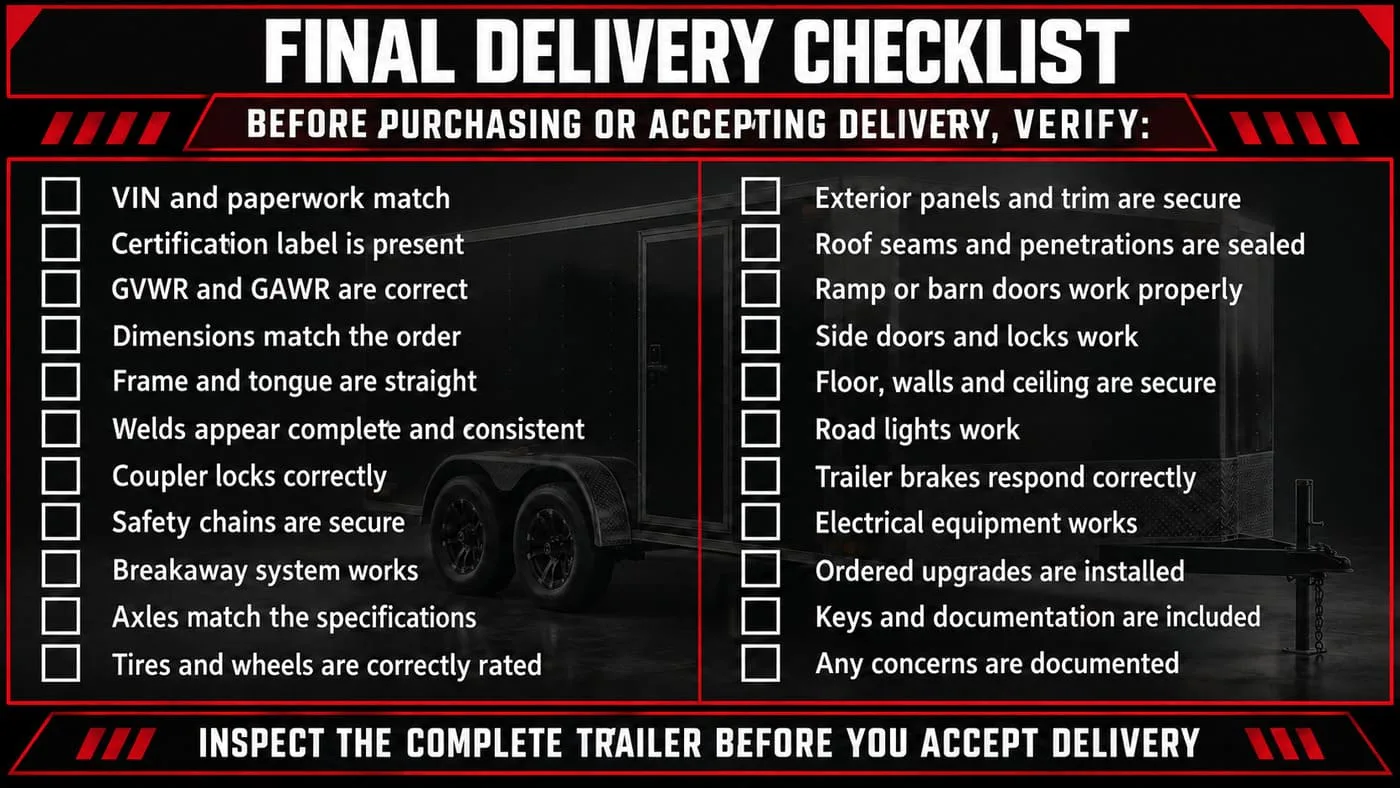
18. Complete a Final Delivery Inspection
- ✓Match the VIN to the paperwork
- ✓Photograph the certification label
- ✓Confirm GVWR and payload
- ✓Test every light
- ✓Test the trailer brakes
- ✓Test the breakaway system
- ✓Open and close every door
- ✓Inspect the roof and exterior seams
- ✓Confirm tire pressure
- ✓Confirm wheel-lug torque procedures
- ✓Verify every ordered option
- ✓Check the coupler and safety chains
- ✓Confirm the trailer sits level
- ✓Collect keys and component instructions
- ✓Document unresolved concerns
Questions to Ask Before Buying an Enclosed Trailer
- ✓What is the trailer’s official GVWR?
- ✓What is the trailer’s empty or curb weight?
- ✓How much payload is available after installed options?
- ✓Which axle package is installed?
- ✓Which axles have brakes?
- ✓What tire size and load range are included?
- ✓What is the rear ramp’s rated capacity?
- ✓What are the clear rear-opening dimensions?
- ✓What materials are used in the floor, walls and roof?
- ✓What is included in the manufacturer’s warranty?
- ✓Who handles warranty repairs?
- ✓What maintenance is required after delivery?
Enclosed Trailer Inspection Checklist
Frequently Asked Questions
What should I inspect first on an enclosed trailer?
Does combined axle capacity equal trailer GVWR?
How do I know how much cargo the trailer can carry?
GVWR − Actual Empty Trailer Weight = Available Payload
Is trailer payload the same as ramp-door capacity?
Should I inspect a brand-new enclosed trailer?
What if I discover a problem during delivery?
Should I test the trailer with my tow vehicle?
Inspect the Complete Trailer Before You Buy
A careful inspection helps verify what you are buying and allows concerns to be addressed before the trailer leaves the dealership.
Southern Trailer Depot can help you compare enclosed-trailer sizes, axle packages, payload capacities and available options before you order.
Call Southern Trailer Depot at 1-888-403-1902 or request a Quick Quote to discuss your trailer needs.