
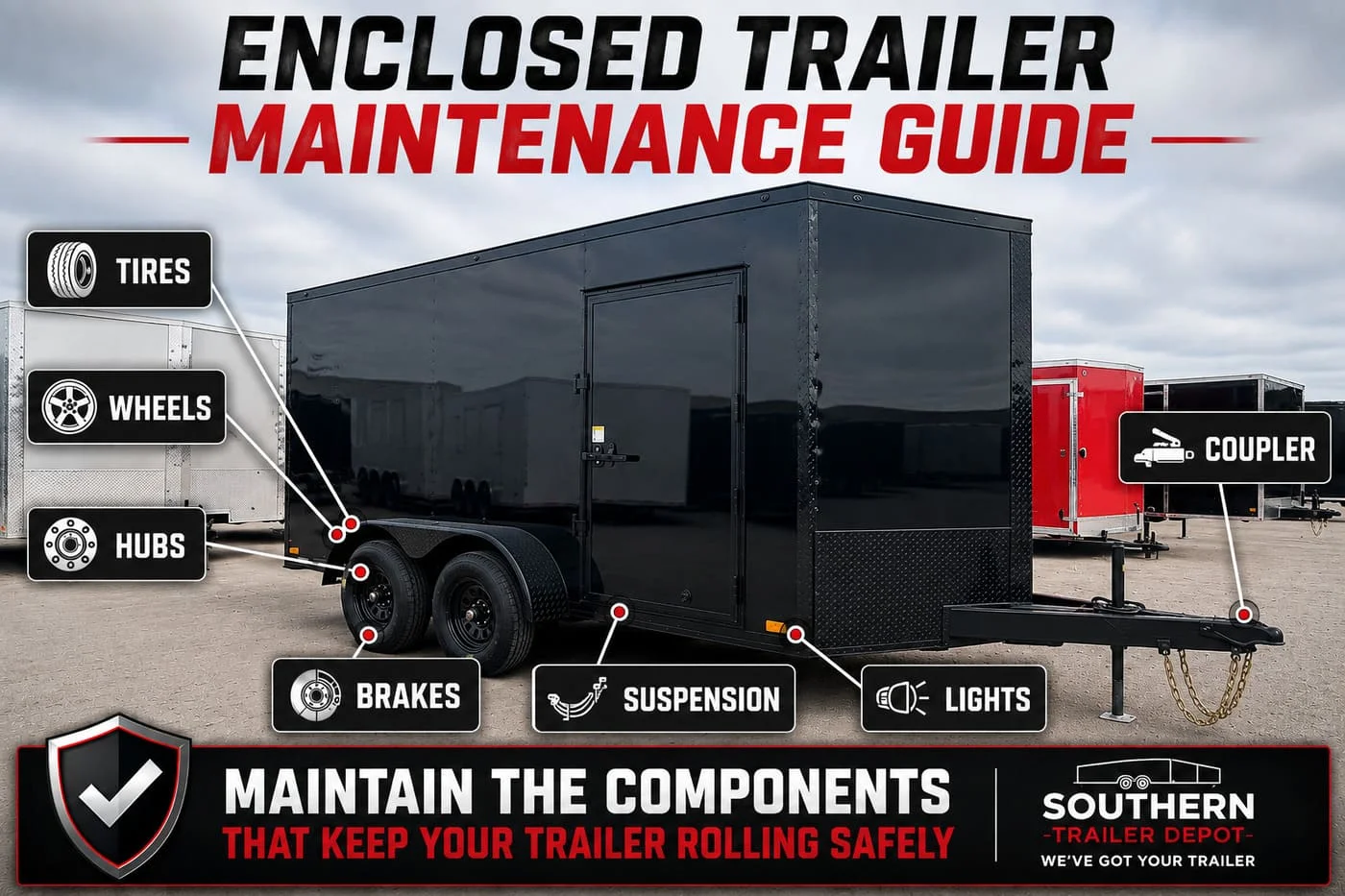
An enclosed trailer can provide years of dependable service, but it should not be treated as maintenance-free.
Tires, wheel bearings, brakes, suspension components, couplers, electrical connections, doors and structural components all experience wear. Regular inspections can help identify problems before they become expensive repairs—or leave a loaded trailer stranded on the road.
This guide covers the major maintenance areas enclosed trailer owners should monitor and explains when additional inspection or professional service may be appropriate.
IMPORTANT: Maintenance requirements vary by axle, component manufacturer, trailer configuration and operating conditions. Always follow the service intervals and procedures specified by the manufacturers of the components installed on your trailer.
For example, Dexter’s published maintenance schedule for its axles recommends checking brakes and the breakaway system at every use, torquing wheel nuts at 3 months/3,000 miles, inspecting certain suspension and brake components at 6 months/6,000 miles, and servicing wheel bearings and several brake components at 12 months/12,000 miles.
Why Enclosed Trailer Maintenance Matters
Trailers frequently sit unused for extended periods and then return to service carrying substantial loads.
That makes maintenance especially important.
A trailer that appears fine while parked may still have:
- ✓Low tire pressure
- ✓Tire deterioration
- ✓Loose lug nuts
- ✓Bearing problems
- ✓Brake wear
- ✓Corroded electrical connections
- ✓Damaged wiring
- ✓Worn suspension components
- ✓Coupler problems
- ✓Water intrusion
Regular inspections give owners an opportunity to find these conditions before towing.
1. Inspect the Tires Before Towing
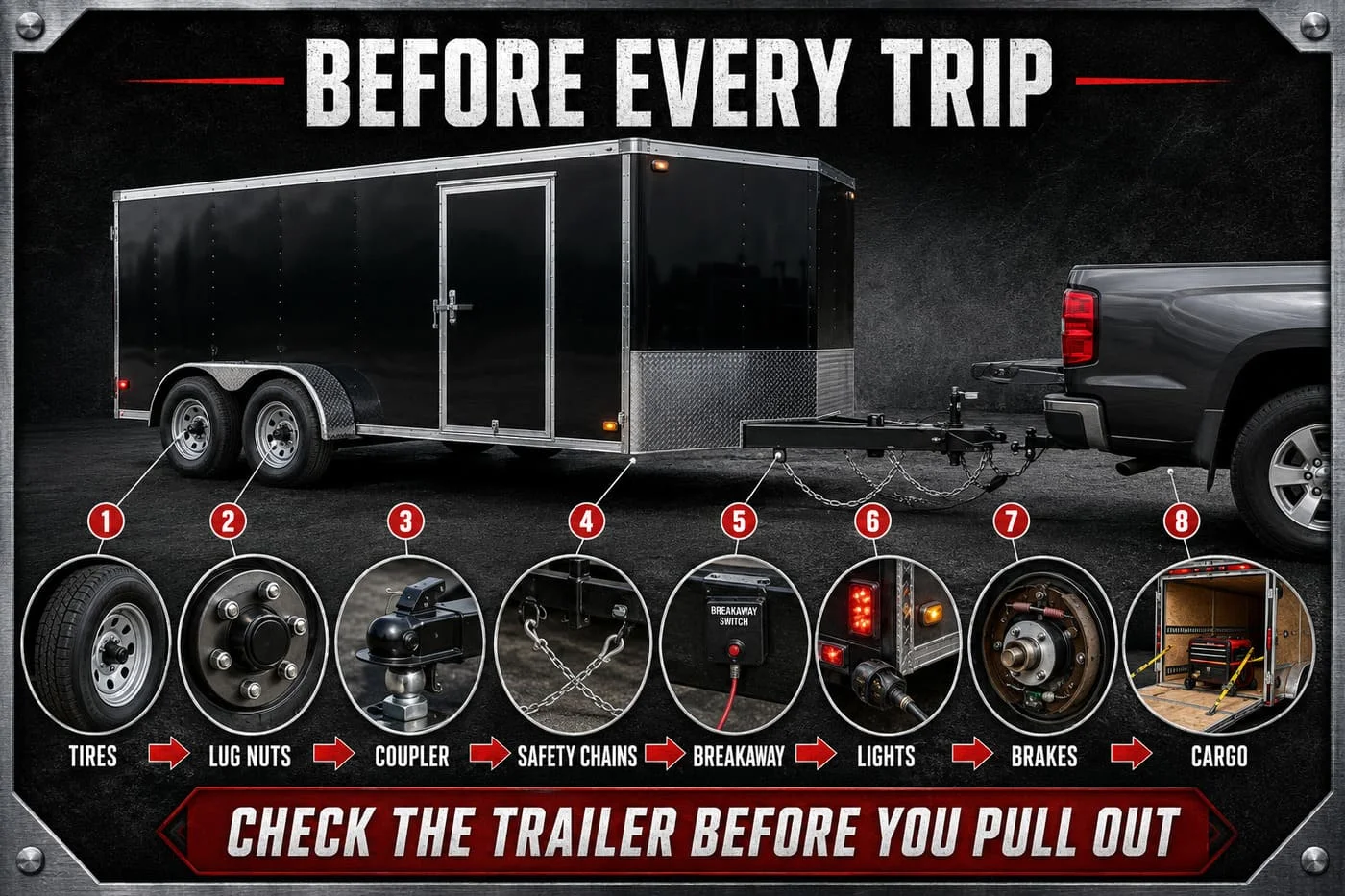
Trailer tires are one of the first things you should inspect before a trip.
Check each tire for:
- ✓Proper inflation
- ✓Cuts
- ✓Cracks
- ✓Bulges
- ✓Uneven wear
- ✓Embedded objects
- ✓Tread condition
- ✓Sidewall damage
- ✓Signs of aging
Do not judge a trailer tire solely by tread depth.
A trailer that is used infrequently may retain substantial tread while its tires deteriorate from age, weather and extended periods of sitting.
Check tire pressure when the tires are cold and use the tire manufacturer’s specifications for the tire and application.
Don’t forget the spare tire. A spare that has been mounted underneath or inside a trailer for years without inspection may not be ready when you need it.
Related guide: Enclosed Trailer Tire Guide: Sizes, Load Ratings, Pressure & Maintenance
2. Check Lug Nuts and Wheels
Wheel fasteners require particular attention after a wheel has been installed, removed or serviced.
Verify lug-nut torque according to the wheel, hub or trailer manufacturer’s requirements.
New trailers and recently serviced wheels may require lug nuts to be rechecked after initial use.
As one example, Dexter’s current maintenance schedule calls for wheel nuts and bolts to be tightened to specified torque values at its 3-month/3,000-mile interval.
Inspect wheels for:
- ✓Cracks
- ✓Bends
- ✓Impact damage
- ✓Elongated lug holes
- ✓Missing lug nuts
- ✓Corrosion
- ✓Other visible damage
Never assume that because a wheel looks normal from several feet away that the wheel and fasteners are ready for a long trip.
3. Maintain the Wheel Bearings
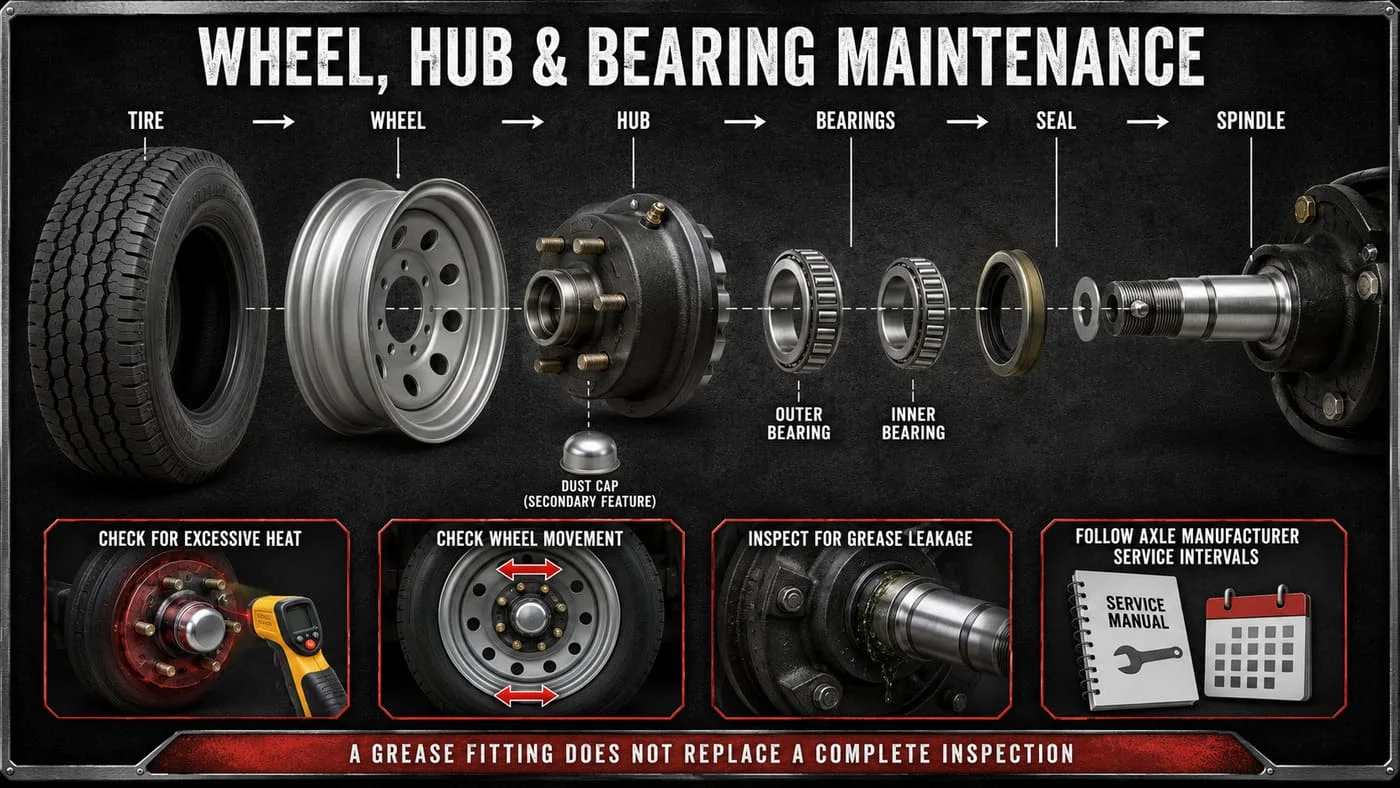
Wheel bearings allow the hub and wheel assembly to rotate around the trailer spindle.
They operate under significant loads and should receive regular inspection and maintenance.
Depending on the axle and hub design, bearing maintenance may involve:
- ✓Inspecting bearings
- ✓Checking bearing adjustment
- ✓Inspecting seals
- ✓Repacking bearings with appropriate grease
- ✓Replacing worn bearings or races
- ✓Inspecting the spindle
- ✓Checking for contamination or water intrusion
Some axle systems incorporate grease fittings or lubrication systems designed to simplify certain maintenance procedures.
However, adding grease does not replace every required inspection.
Follow the axle manufacturer’s instructions for your specific hub and bearing system.
For example, Dexter’s published guidance for light-duty running gear calls for wheel bearings and cups to be inspected for corrosion or wear, cleaned and repacked at 12 months or 12,000 miles.
Warning Signs of Possible Bearing Problems
Stop and investigate if you notice:
- ✓Excessive hub heat
- ✓Grinding or unusual wheel noise
- ✓Wheel looseness
- ✓Grease leaking around the hub
- ✓Abnormal vibration
- ✓Visible hub or seal damage
A bearing failure can cause much more than an inconvenient breakdown. Severe failures can damage the hub, spindle, brake components or wheel assembly.
4. Inspect Electric Trailer Brakes
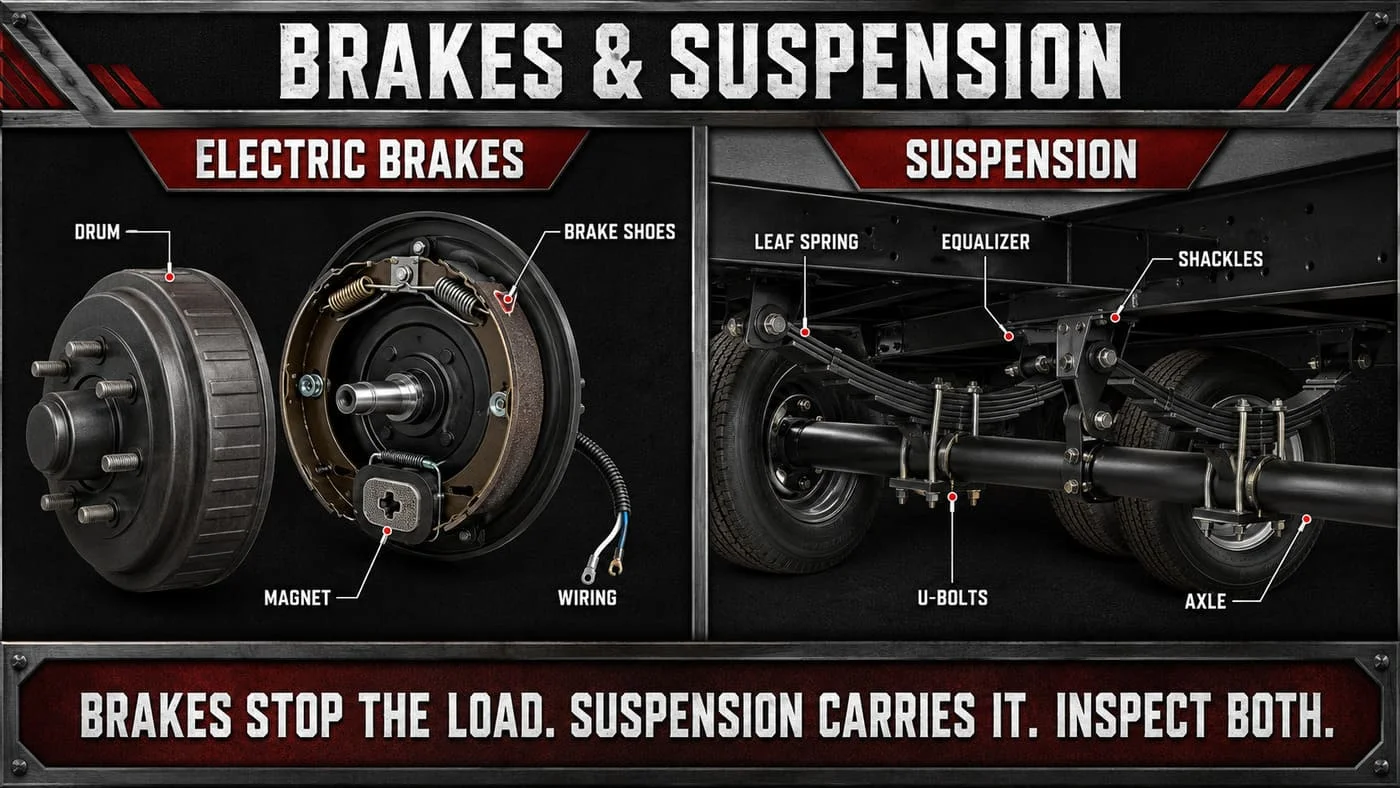
Many tandem-axle and heavier enclosed trailers use electric drum brakes.
These systems should be inspected periodically for wear, adjustment and proper operation.
Brake-system maintenance can include checking:
- ✓Brake shoes
- ✓Magnets
- ✓Drums
- ✓Wiring
- ✓Electrical connections
- ✓Brake adjustment
- ✓Breakaway system
- ✓Brake controller operation
The tow vehicle’s brake controller should provide smooth, proportional braking appropriate for the trailer and load.
If braking suddenly feels substantially weaker, stronger, inconsistent or different from normal, determine the cause before continuing to tow.
As one example, Dexter calls for an operational brake test at every use, with more detailed brake-component inspections at specified mileage and time intervals in its published maintenance schedule.
Related guide: Trailer Brake Guide: Electric Brakes, Controllers & Maintenance
5. Test the Breakaway System
The trailer’s breakaway system is an important safety component.
Its purpose is to activate the trailer brakes if the trailer separates from the tow vehicle under conditions in which the system is designed to operate.
Inspect the:
- ✓Breakaway switch
- ✓Pull cable
- ✓Battery
- ✓Wiring
- ✓Connections
- ✓Mounting hardware
The breakaway cable should be connected correctly to the tow vehicle and should not simply be wrapped around the safety chains.
Follow the component manufacturer’s testing procedure to verify proper operation.
6. Inspect the Suspension
The suspension carries the trailer and its cargo while absorbing road movement.
Depending on the trailer, components may include:
- ✓Leaf springs
- ✓Spring hangers
- ✓Equalizers
- ✓Shackles
- ✓Bolts
- ✓Bushings
- ✓U-bolts
- ✓Torsion axle components
Look for signs of:
- ✓Cracked or broken springs
- ✓Loose hardware
- ✓Excessive wear
- ✓Damaged bushings
- ✓Bent components
- ✓Uneven axle position
- ✓Abnormal tire wear
- ✓Structural damage around suspension mounting points
Suspension wear can affect tire life, tracking, handling and load distribution.
Related guide: Trailer Axle Guide: How to Choose the Right Axles for Your Trailer
7. Inspect the Coupler, Safety Chains and Jack
Before connecting the trailer, inspect the tongue area.
Check the coupler for:
- ✓Proper operation
- ✓Damage
- ✓Excessive wear
- ✓Secure mounting
- ✓Proper adjustment
Also inspect the safety chains and attachment points.
Look for:
- ✓Bent links
- ✓Excessive corrosion
- ✓Damaged hooks
- ✓Worn components
- ✓Improper attachments
Inspect the tongue jack and verify that it raises, lowers and secures properly.
If the trailer uses an electric tongue jack, inspect its wiring and electrical connections as well.
8. Check the Trailer Lights and Wiring
Before towing, test the complete lighting system.
Check:
- ✓Left turn signal
- ✓Right turn signal
- ✓Brake lights
- ✓Running lights
- ✓Clearance lights
- ✓Marker lights
Inspect the trailer connector for damage, corrosion or loose terminals.
The wiring underneath the trailer should also be inspected periodically for:
- ✓Abrasion
- ✓Pinching
- ✓Loose connections
- ✓Exposed conductors
- ✓Road damage
- ✓Corrosion
Electrical problems are often easier to correct at the shop than on the shoulder of a highway.
9. Inspect the Ramp Door and Side Doors
Doors are used repeatedly and can experience considerable wear.
For ramp doors, inspect:
- ✓Hinges
- ✓Cables or springs
- ✓Fasteners
- ✓Latches
- ✓Door seals
- ✓Ramp surface
- ✓Transition flap, if equipped
For side and escape doors, inspect:
- ✓Hinges
- ✓Latches
- ✓Locks
- ✓Weather seals
- ✓Door alignment
A heavy ramp door with damaged lifting components can create a serious hazard. Do not continue operating a door if cables, springs, hinges or other major components appear damaged.
10. Look for Water Intrusion
Water can enter an enclosed trailer through damaged seals, roof penetrations, doors or other openings.
Periodically inspect the interior for:
- ✓Water stains
- ✓Damp plywood
- ✓Soft flooring
- ✓Discoloration
- ✓Mold or mildew
- ✓Rust
- ✓Damaged sealant
- ✓Moisture around doors or roof penetrations
Finding a small leak early can help prevent considerably more extensive damage.
Pay additional attention to trailers equipped with roof vents, air conditioners or other roof-mounted accessories.
11. Inspect the Floor
Trailer flooring supports the cargo and is exposed to concentrated loads, moisture, dirt and repeated use.
Check for:
- ✓Soft spots
- ✓Cracks
- ✓Rot
- ✓Delamination
- ✓Loose fasteners
- ✓Significant gouges
- ✓Chemical damage
- ✓Water damage
Trailers regularly carrying vehicles or heavy equipment should receive additional attention around tire paths and concentrated loading areas.
Never assume the floor remains structurally sound simply because the upper surface looks acceptable.
12. Inspect Tie-Downs and E-Track
Cargo-restraint equipment should be treated as functional equipment rather than decoration.
Inspect:
- ✓D-rings
- ✓E-Track
- ✓Mounting hardware
- ✓Welded attachment points
- ✓Straps
- ✓Ratchets
- ✓Hooks
Do not use damaged restraint equipment.
Also verify that the tie-down system and its attachment structure are appropriate for the cargo being secured.
Related guide: Trailer Tongue Weight & Proper Loading Guide
13. Keep the Trailer Clean
Cleaning is also an opportunity to inspect the trailer closely.
Remove:
- ✓Road salt
- ✓Mud
- ✓Chemicals
- ✓Debris
- ✓Leaves
- ✓Dirt accumulation
Pay attention to the undercarriage, especially when the trailer has been operated around road salt or corrosive materials.
Cleaning the roof periodically can also make it easier to identify damaged sealant, roof penetrations or other developing problems.
14. Maintain Exterior Sealants
Roof vents, windows, seams and other penetrations may use sealants to help prevent water intrusion.
Sealants can deteriorate over time.
Inspect them periodically for:
- ✓Cracking
- ✓Separation
- ✓Shrinkage
- ✓Missing material
- ✓Loss of adhesion
Use sealants appropriate for the trailer material and application when repairs are required.
Do not simply cover a significant leak with additional sealant without identifying the source of the problem.
15. Maintain the Battery
Trailers may contain batteries for:
- ✓Breakaway systems
- ✓Electric jacks
- ✓Winches
- ✓Interior lighting
- ✓12-volt accessories
- ✓Hydraulic systems
Battery maintenance depends on battery type and electrical system.
Check:
- ✓State of charge
- ✓Connections
- ✓Terminal corrosion
- ✓Mounting
- ✓Wiring
- ✓Physical battery condition
Trailers stored for long periods may require additional battery-maintenance procedures.
Suggested Enclosed Trailer Maintenance Schedule
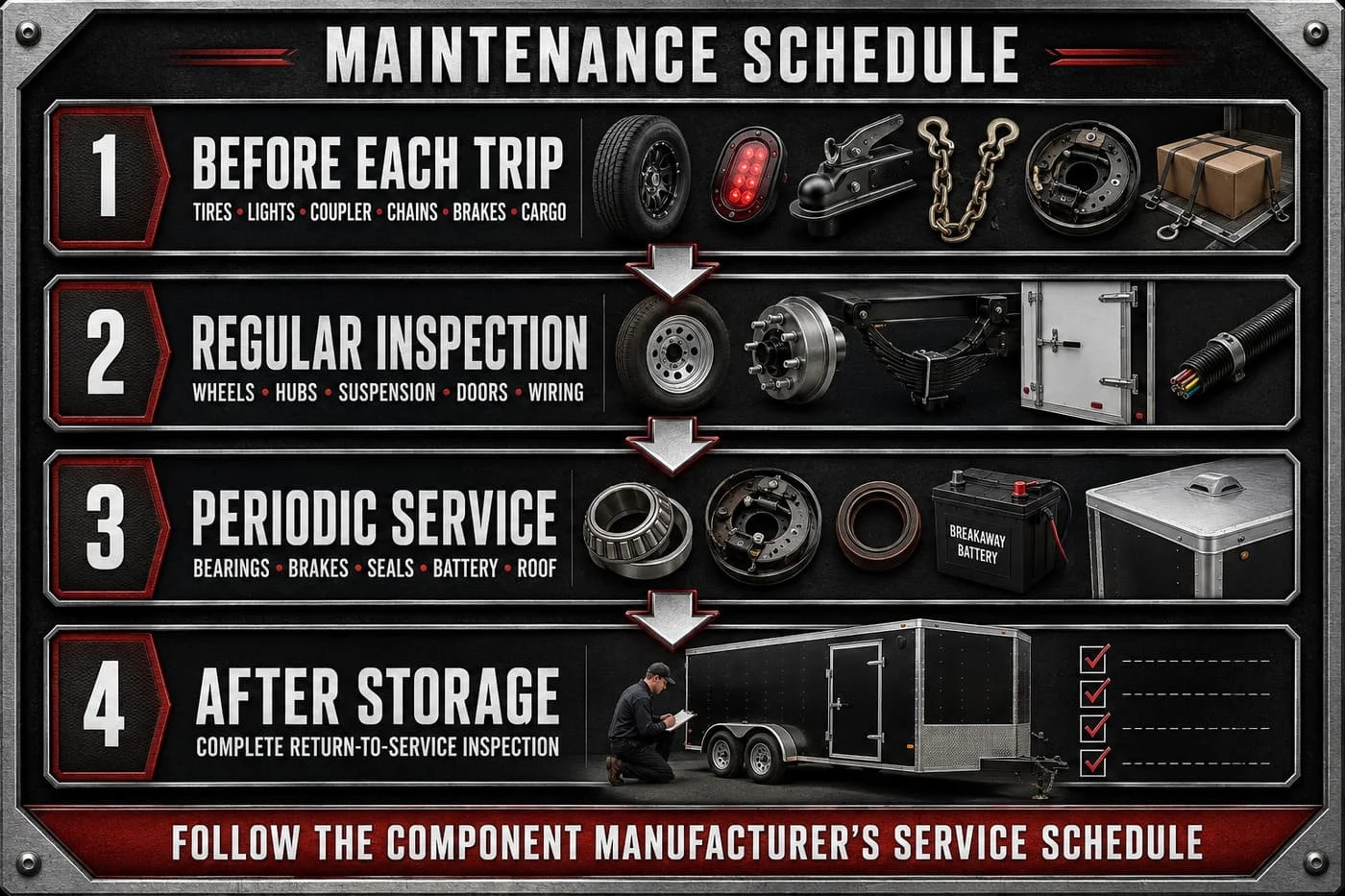
Exact service intervals should come from the applicable component manufacturers, but this checklist can help owners establish an inspection routine.
| WHEN | ITEMS TO CHECK |
|---|---|
| Before Each Trip | Tires, tire pressure, lug nuts, coupler, safety chains, lights, brakes, breakaway cable and cargo securement |
| Regularly During Use | Tires, wheels, hubs, suspension, doors, wiring and visible structural components |
| After Wheel Service | Recheck wheel-fastener torque according to manufacturer instructions |
| Periodically | Bearings, brakes, suspension, seals, flooring, roof, doors, electrical connections and battery |
| Before Long Trips | Complete trailer inspection and correction of known problems |
| After Extended Storage | Tires, brakes, bearings, lights, battery, coupler, seals and general condition |
| According to Manufacturer Schedule | Bearing service, brake service and component-specific maintenance |
The manufacturer’s maintenance schedule takes priority over a generalized checklist.
Maintenance Needs Change With Trailer Use
Two identical trailers may require very different maintenance schedules.
A trailer that travels thousands of miles every month experiences different wear from one that sits in storage for most of the year.
Consider:
- ✓Mileage — More road use generally means more wear.
- ✓Weight — Trailers routinely operating near their rated capacity place greater demands on tires, bearings, brakes and suspension.
- ✓Road Conditions — Rough roads, construction sites and unpaved surfaces can increase component wear.
- ✓Storage — Extended outdoor storage exposes tires, seals and other components to weather.
- ✓Climate — Heat, humidity, salt and freezing conditions can influence deterioration.
- ✓Trailer Use — Race trailers, contractor trailers, car haulers and general cargo trailers can experience very different operating conditions.
Know Your Trailer’s GVWR and Payload
Maintenance cannot compensate for an overloaded trailer.
Before loading, know:
- ✓Trailer GVWR
- ✓Empty trailer weight
- ✓Available payload
- ✓Tire load capacity
- ✓Axle configuration
- ✓Cargo weight
- ✓Tongue weight
Accessories added after the trailer is manufactured also consume payload.
Cabinets, generators, air conditioners, winches, batteries, finished interiors and other equipment all become part of the trailer’s empty operating weight.
Related guide: GVWR Explained: What GVWR Means and Why It Matters When Buying a Trailer
When Should You Stop Towing?
Some conditions deserve immediate attention.
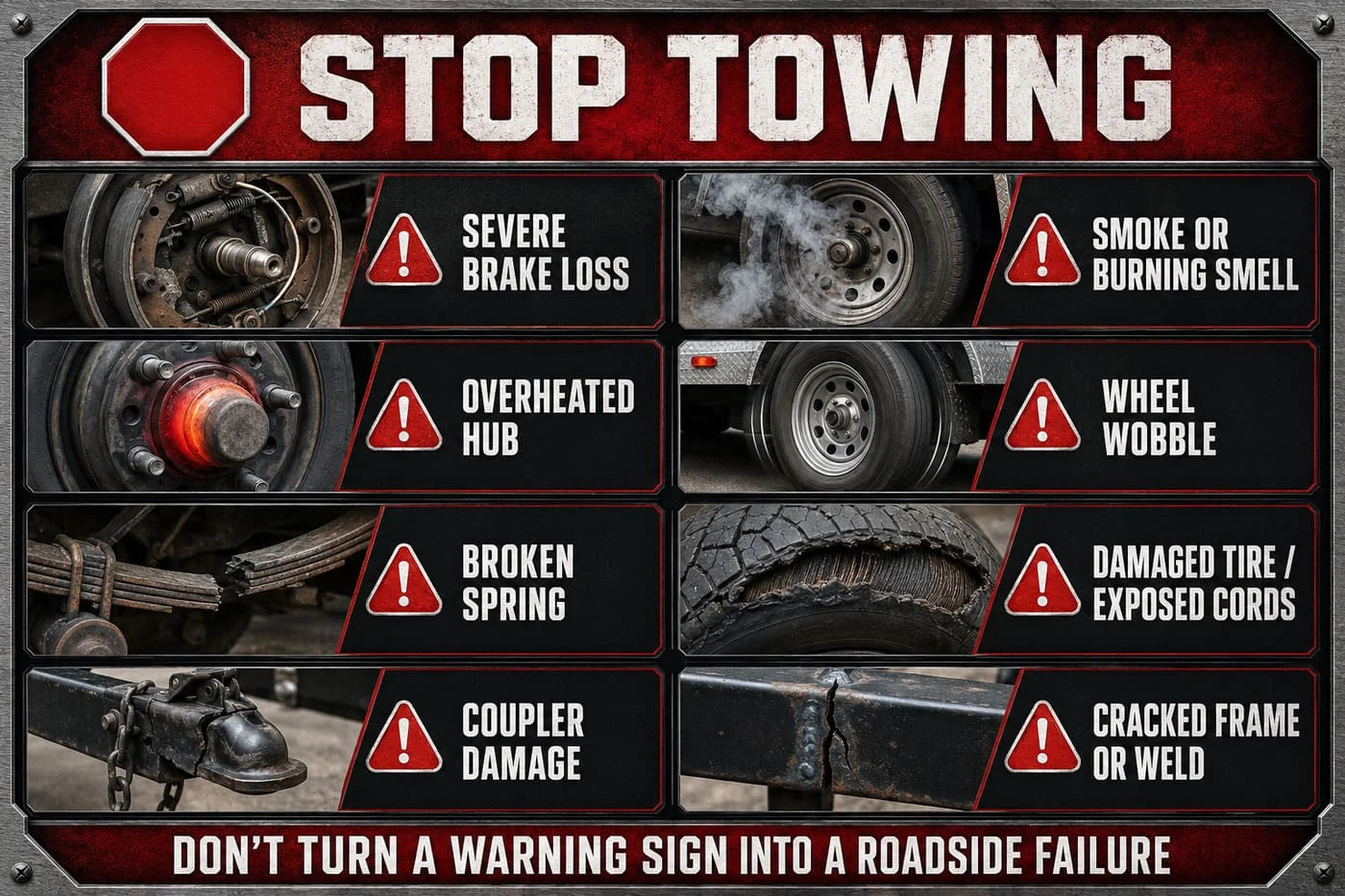
Continuing to tow a trailer with a significant mechanical or structural problem can turn a repairable issue into a much larger failure.
When Should a Trailer Be Professionally Inspected?
Routine owner inspections are important, but some maintenance and repairs require specialized tools, knowledge or disassembly.
Professional inspection may be appropriate when:
- ✓The trailer has accumulated substantial mileage
- ✓The trailer has been stored for an extended period
- ✓Braking performance changes
- ✓A hub repeatedly runs hot
- ✓Tires develop unusual wear patterns
- ✓Suspension components appear damaged
- ✓The trailer has been involved in an accident
- ✓Structural damage is suspected
- ✓Wheel bearings require service
- ✓You are uncertain about the condition of a safety-related component
Read our “When Should You Have Your Trailer Professionally Inspected?” guide for additional information.
Before You Tow Checklist
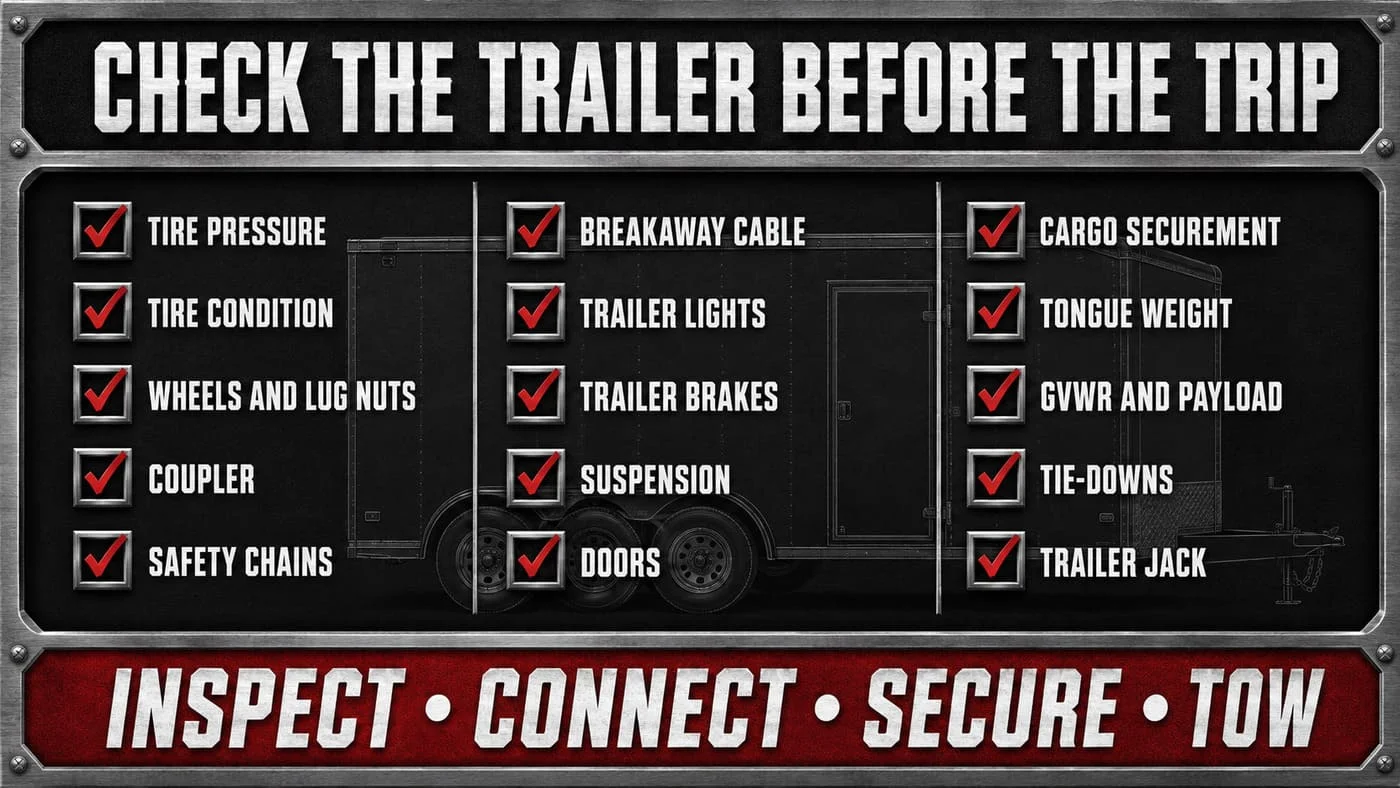
Before towing:
- ✓Check tire pressure
- ✓Inspect tire condition
- ✓Verify wheels and lug nuts
- ✓Check the coupler
- ✓Connect safety chains correctly
- ✓Connect the breakaway cable
- ✓Test trailer lights
- ✓Verify trailer brakes
- ✓Inspect visible suspension components
- ✓Secure all doors
- ✓Secure the cargo
- ✓Confirm proper tongue weight
- ✓Check GVWR and payload
- ✓Inspect tie-downs
- ✓Make sure the trailer jack is fully raised
A few minutes of inspection before departure can identify problems before they become roadside failures.
Storing the trailer between trips? See our How to Store an Enclosed Trailer guide.
Frequently Asked Questions
How often should I service my enclosed trailer?
There isn't one universal interval for every trailer. Service schedules depend on the axle, brakes, bearings, suspension and other components. Follow the manufacturers' specified time and mileage intervals.
How often should trailer wheel bearings be repacked?
Follow your axle manufacturer's requirements. As one example, Dexter recommends inspection, cleaning and repacking of applicable wheel bearings at 12 months or 12,000 miles in its light-duty maintenance guidance.
Should I check trailer tires before every trip?
Yes. Tire condition and inflation deserve frequent attention. Dexter lists tire inflation as an every-use check, while NHTSA emphasizes routine cold-pressure checks and inspections for tire damage.
How do I know what PSI to put in my trailer tires?
Follow the specifications provided for the particular trailer/tire application and its certification information rather than guessing based on another trailer.
How often should trailer brakes be inspected?
Follow the brake and axle manufacturer's schedule. Dexter calls for an operational brake test at every use and more detailed brake-component inspections at specified mileage/time intervals.
Why are my trailer tires wearing unevenly?
Possible causes include inflation problems, loading, wheel or suspension issues, axle alignment or damaged components. Uneven wear should be investigated rather than simply replacing the tire.
Do enclosed trailers require maintenance if they aren't used often?
Yes. Tires can lose pressure and age, batteries can discharge, corrosion can develop, seals can deteriorate and moisture can enter while a trailer sits.
Protect Your Enclosed Trailer
Good trailer maintenance is not about replacing components unnecessarily. It is about routinely checking the systems that allow the trailer to safely carry its load.
Pay particular attention to the components responsible for keeping the trailer connected, rolling, braking and carrying weight:
TIRES→WHEELS→BEARINGS→BRAKES→SUSPENSION→COUPLER→CARGO SECUREMENT
Combine regular owner inspections with the maintenance schedules provided by your axle, tire, brake and trailer-component manufacturers.
Southern Trailer Depot has helped customers choose enclosed trailers for cargo, equipment, motorsports, business and specialty applications since 2007.
If you’re replacing an older trailer or need help choosing the right size, axle package, GVWR or configuration for your application, contact Southern Trailer Depot or request a Quick Quote.
Looking for more guides? Visit our Trailer Buyer’s Guide hub.